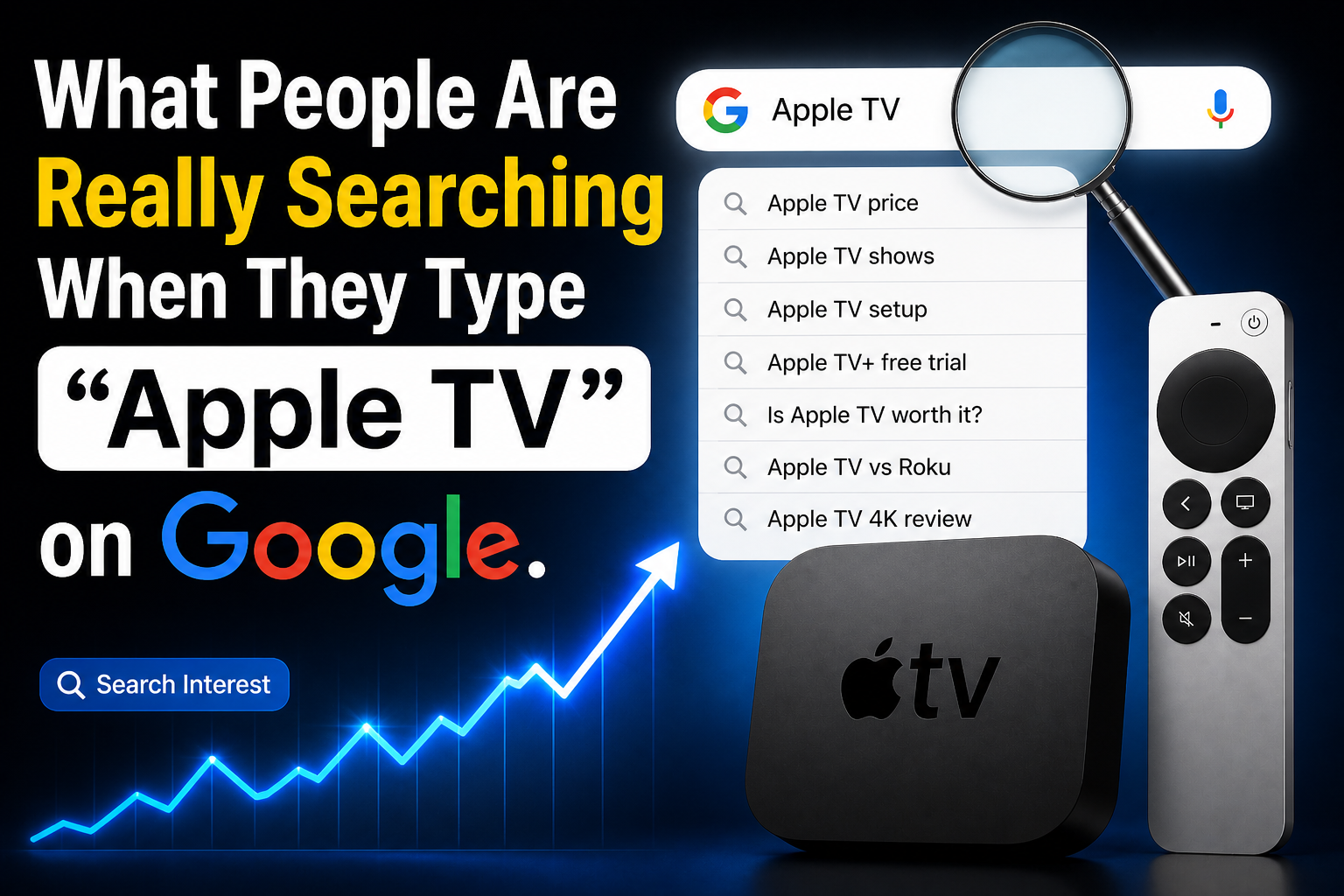
Something interesting is happening on Google right now.
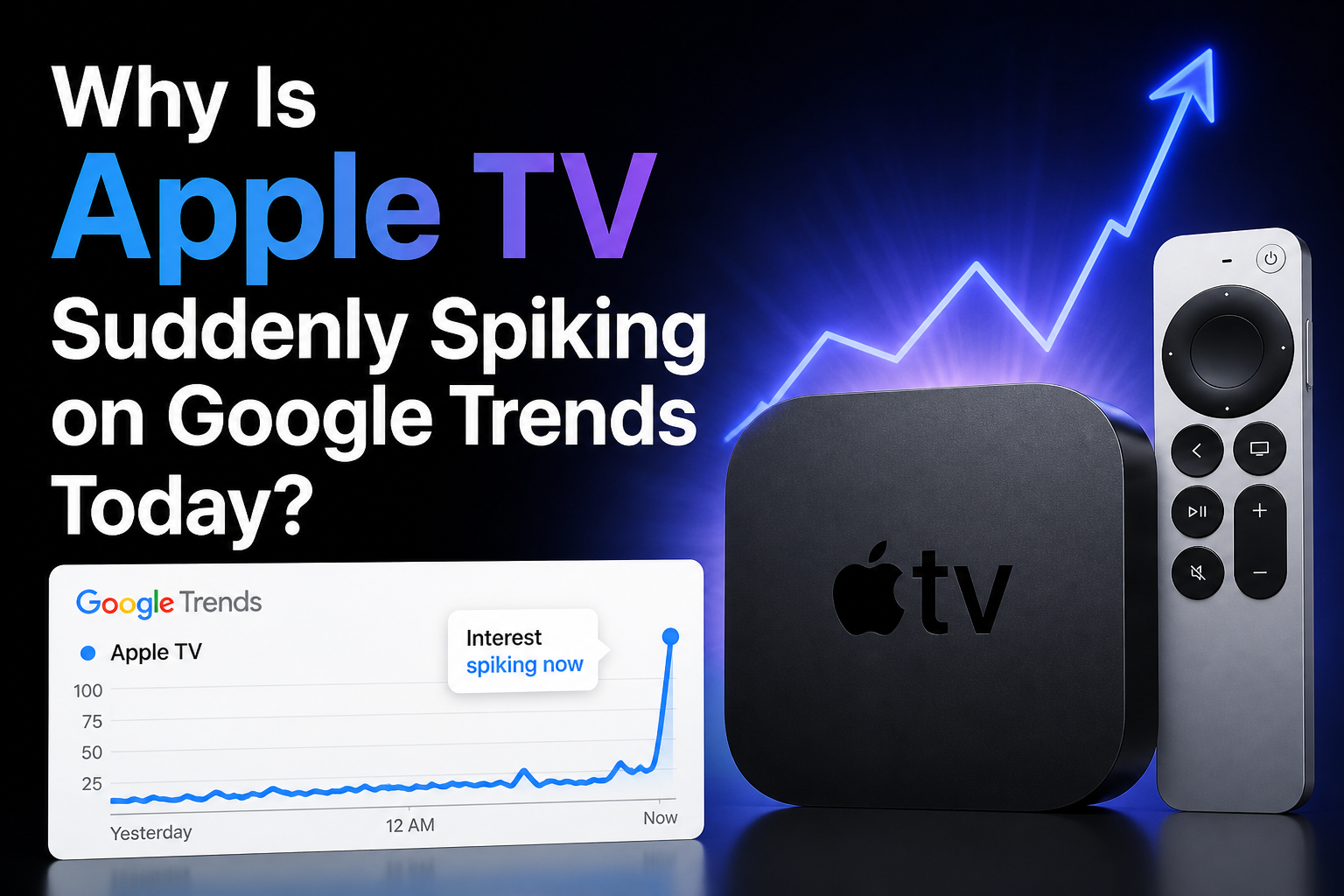
Not only is “Apple TV” trending . but a variation of it, “appletv” (without the space), has spiked even harder, jumping by nearly 500%.
At first glance, that might seem like a small difference.
But it reveals something much deeper about how people search, what they’re confused about, and what they actually want.
Let’s break it down. because the intent behind these searches is where the real story lies.
Apple TV vs Appletv: Does a Space Really Matter?
The Short Answer: Yes… and No
From Google’s perspective, “Apple TV” and “appletv” often lead to similar results.
But from a user behavior perspective, they can signal different levels of intent.
That tiny missing space?
It often reflects how fast, confused, or urgent the search is.
Why “Appletv” Is Spiking Faster
When users type “appletv” (no space), it usually means:
- They’re searching quickly on mobile
- They’ve just seen something and reacted instantly
- They don’t care about accuracy — they want answers fast
It’s a high-intent, low patience search.
And when that version jumps by 500%, it tells us one thing:
A lot of people are searching in the moment — not planning, just reacting.
What Are People Actually Looking For?
Here’s where it gets interesting.
Not everyone typing “Apple TV” wants the same thing.
In fact, this keyword splits into three major search intentions and each one tells a different story.
1. Streaming Intent: “What Can I Watch?”
The Curiosity Trigger
This is the biggest category.
People see a show trending, hear about it from a friend, or watch a clip online and immediately search:
“Apple TV”
What they really mean is:
- Where can I watch this show?
- Is it on Apple TV+?
- Do I need a subscription?
Why This Drives Massive Spikes
Streaming curiosity spreads fast.
One viral show, one trending scene, or one celebrity mention can push thousands of people to search within minutes.
They’re not searching for the platform.
They’re searching for content.
2. Hardware Intent: “Do I Need the Device?”
The Confusion Most People Have
Here’s where things start to overlap.
Many users don’t know the difference between:
- Apple TV (the physical device)
- Apple TV+ (the streaming service)
So they search broadly.
What These Users Are Trying to Figure Out
These searches usually include:
- What is Apple TV?
- Do I need Apple TV to watch Apple TV+?
- How much does Apple TV cost?
This group isn’t just curious. they’re evaluating.
They’re trying to decide whether to buy, subscribe, or ignore.
3. Troubleshooting Intent: “Why Isn’t It Working?”
The Panic Search Effect
Then there’s a completely different type of user.
Not curious. Not exploring.
Frustrated.
What These Searches Look Like
When something goes wrong, people search instantly:
- Apple TV not working
- Apple TV login issue
- Apple TV app not loading
And here’s the key:
These searches spike very fast. especially if multiple users face the same issue at once.
The Hidden Insight Behind These Searches
This is where things get really interesting.
The keyword “Apple TV” looks simple.
But in reality, it’s carrying multiple layers of intent at the same time:
- Curiosity (what to watch)
- Confusion (how it works)
- Urgency (fix a problem)
And when all three happen together?
You get spikes like:
- 300% for “Apple TV”
- 500% for “appletv”
Why Google Trends Looks So Volatile
When you see sudden spikes, it’s not just about popularity.
It’s about overlapping behaviors happening at once.
Think about it:
- A show goes viral → streaming searches increase
- New users join → setup questions rise
- Some users face issues → troubleshooting spikes
All of this stacks together in real time.
The Real Reason Behind the “Appletv” Surge
That 500% spike in “appletv” tells us something powerful:
People aren’t searching carefully. they’re searching urgently.
They’re typing fast.
They’re reacting instantly.
They want answers now.
And when millions of people do that at the same time, even a small variation like missing a space becomes a major trend.
Final Thoughts: It’s Not Just a Keyword It’s Behavior
“Apple TV” isn’t just a search term.
It’s a reflection of what people are experiencing in the moment.
Some are discovering something new.
Some are trying to understand it.
Some are just trying to fix it.
And all of them end up typing the same thing. or something close to it.
Apple TV. Appletv. Doesn’t matter.
Because behind both searches is the same thing:
A question that needs an answer.
And right now, millions of people are asking it at the same time.