
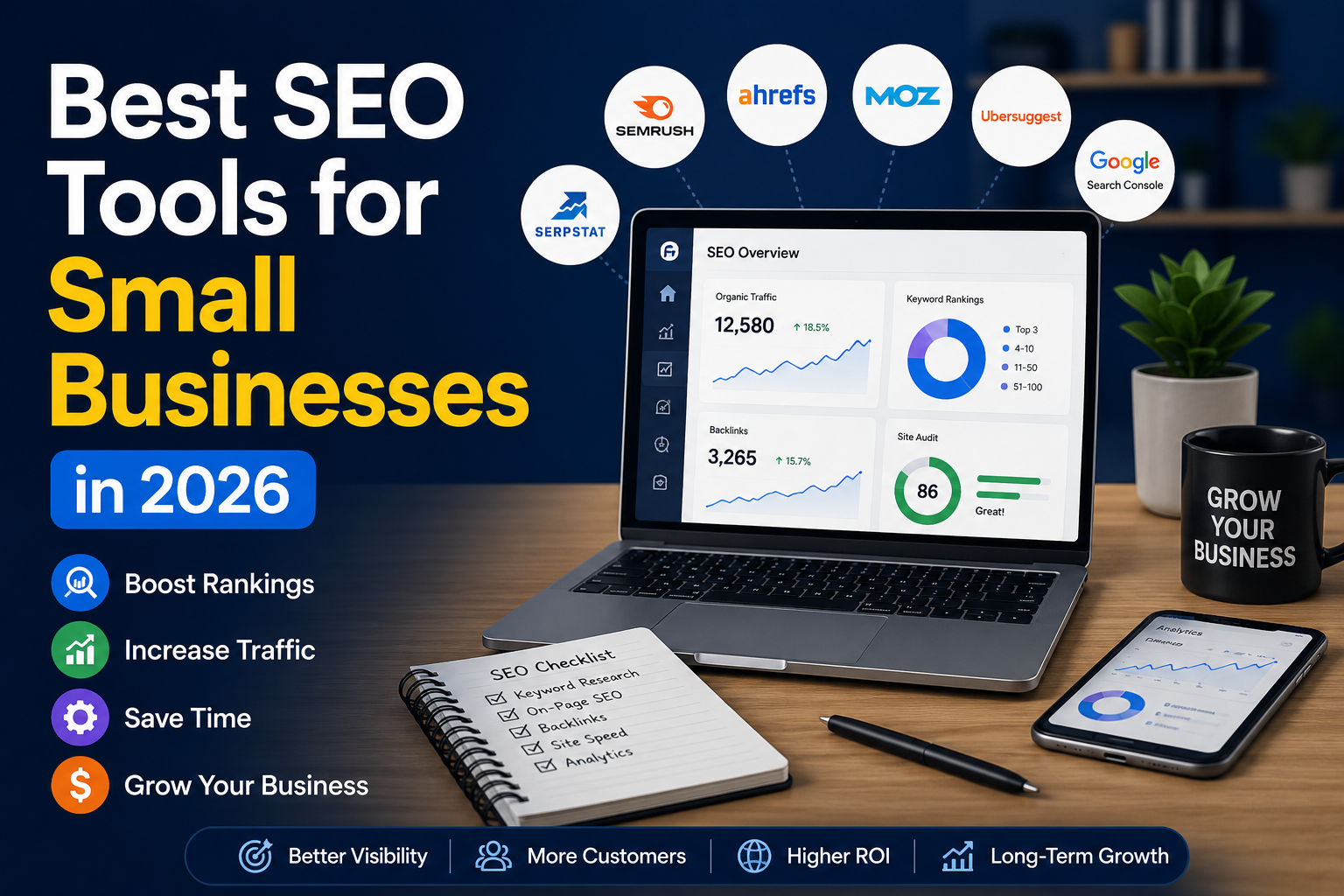
SEO stays one of the greatest ways for small businesses to expand online in 2026. No matter if you’re running a local service, an eCommerce store, or a brand new startup, showing up on Google matters a lot. The race for those top spots is way harder now, though.
So picking the right SEO tools is majorly important.
I’ve tested many platforms; some are super powerful but darn expensive. Others are cheaper and better for newbies.
Here, I’ll cover the leading SEO tools for small biz in 2026, focus on what makes them unique, and help you choose the perfect fit.
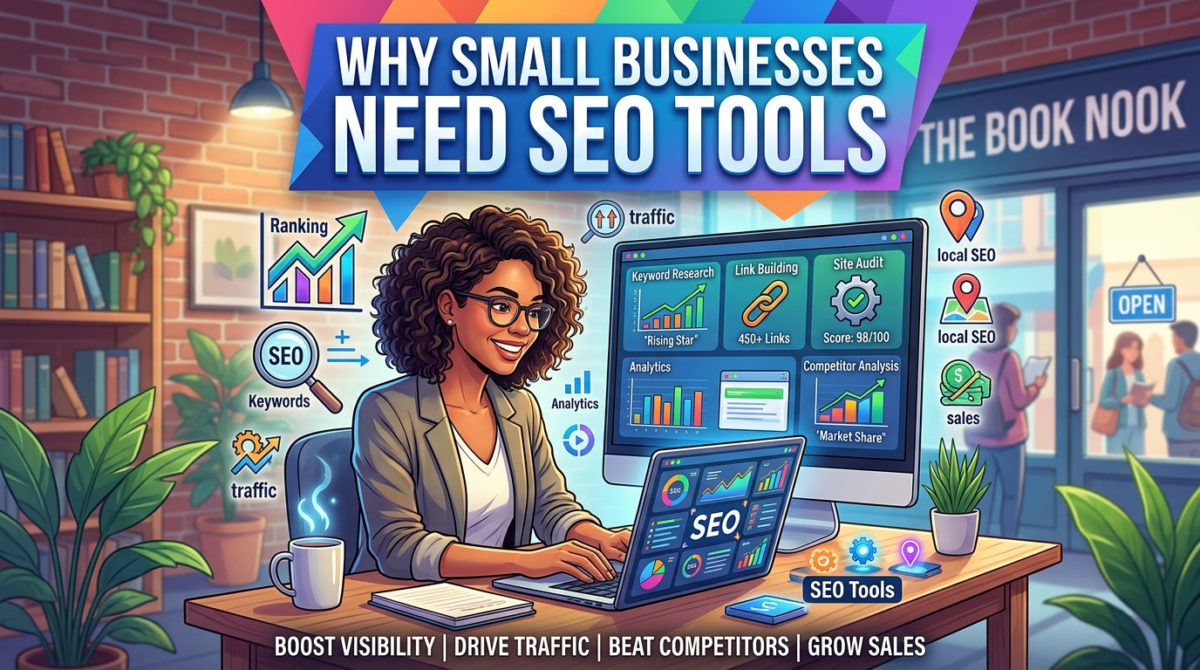
Why Small Businesses Need SEO Tools
Many business owners think SEO is only for large companies.
That is not true.
In fact, SEO can be one of the most cost-effective marketing channels for small businesses.
Good SEO tools help you:
- Increase organic traffic
- Improve Google rankings
- Find profitable keywords
- Monitor competitors
- Track website performance
- Generate more leads
Without reliable data, SEO often becomes guesswork.
Because of that, investing in the right software can save both time and money.
What to Look for in an SEO Tool

Not every SEO platform is built for small businesses.
Before choosing a tool, I always recommend looking at a few key features.
Ease of Use
If the dashboard feels confusing, you may never use the software properly.
Therefore, simplicity matters.
Keyword Research Features
Keyword research remains the foundation of SEO.
A good tool should help you discover opportunities with realistic ranking potential.
Rank Tracking
Tracking keyword positions helps measure progress over time.
Without rank tracking, it becomes difficult to know what is working.
Site Audits
Technical issues can hurt rankings.
Site audits help identify problems before they affect traffic.
Backlink Analysis
Backlinks remain an important ranking factor.
Strong backlink tools help you understand your website’s authority.
Pricing and Value
Most small businesses work with limited budgets.
As a result, pricing should always be part of the decision.
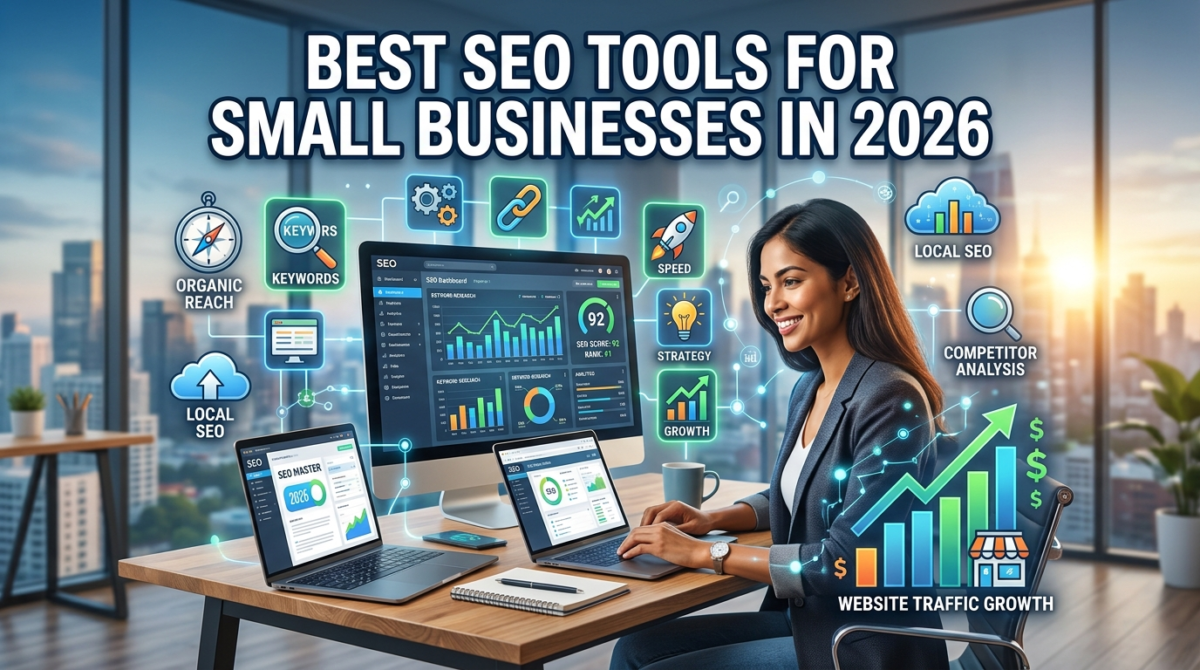
Best SEO Tools for Small Businesses in 2026
Semrush
Semrush remains one of the most complete SEO platforms available.
It combines SEO, content marketing, competitor analysis, and PPC research in one dashboard.
Best For
All-in-one SEO and digital marketing.
Key Features
- Keyword research
- Site audits
- Competitor tracking
- Rank monitoring
- Content tools
Pros
- Huge keyword database
- Excellent reporting
- Powerful competitor insights
Cons
- Higher pricing
- Learning curve for beginners
Ahrefs
Ahrefs is known for backlink analysis and competitor research.
However, the platform also offers strong keyword research tools.
Best For
Backlink analysis and SEO research.
Key Features
- Backlink tracking
- Keyword explorer
- Site audits
- Content analysis
Pros
- Excellent backlink data
- Easy interface
- Strong content research
Cons
- Expensive for smaller businesses
- Limited PPC features
Moz Pro
Moz Pro remains a popular choice for beginners.
The platform focuses on simplicity and education.
Best For
Beginner-friendly SEO.
Key Features
- Keyword tracking
- Site audits
- Link analysis
- Domain Authority metrics
Pros
- Easy to learn
- Clean dashboard
- Strong educational content
Cons
- Smaller database than competitors
- Fewer advanced features
SE Ranking
SE Ranking has become one of the best value options for small businesses.
It offers many enterprise-level features at a lower cost.
Best For
Affordable SEO management.
Key Features
- Rank tracking
- Site audits
- Competitor research
- Keyword analysis
Pros
- Affordable pricing
- Strong feature set
- User-friendly dashboard
Cons
- Smaller data sets than Semrush
Mangools
Mangools focuses on simplicity and ease of use.
That makes it popular among freelancers and small businesses.
Best For
Keyword research and simplicity.
Key Features
- KWFinder
- SERP analysis
- Link research
- Rank tracking
Pros
- Beginner-friendly
- Affordable
- Clean interface
Cons
- Fewer advanced features
Ubersuggest
Ubersuggest provides solid SEO functionality at a lower price point.
Many small businesses use it as their first SEO platform.
Best For
Budget-conscious businesses.
Key Features
- Keyword research
- Site audits
- Competitor analysis
- Traffic estimates
Pros
- Affordable plans
- Easy setup
- Beginner-friendly
Cons
- Smaller database than premium tools
Google Search Console
Google Search Console remains one of the most valuable SEO tools available.
Best of all, it is completely free.
Best For
Free SEO insights.
Key Features
- Search performance tracking
- Indexing reports
- Technical SEO data
- Click-through rate analysis
Pros
- Free
- Direct Google data
- Essential for SEO
Cons
- Limited competitor data
- No advanced keyword research
Best Free SEO Tools for Small Businesses
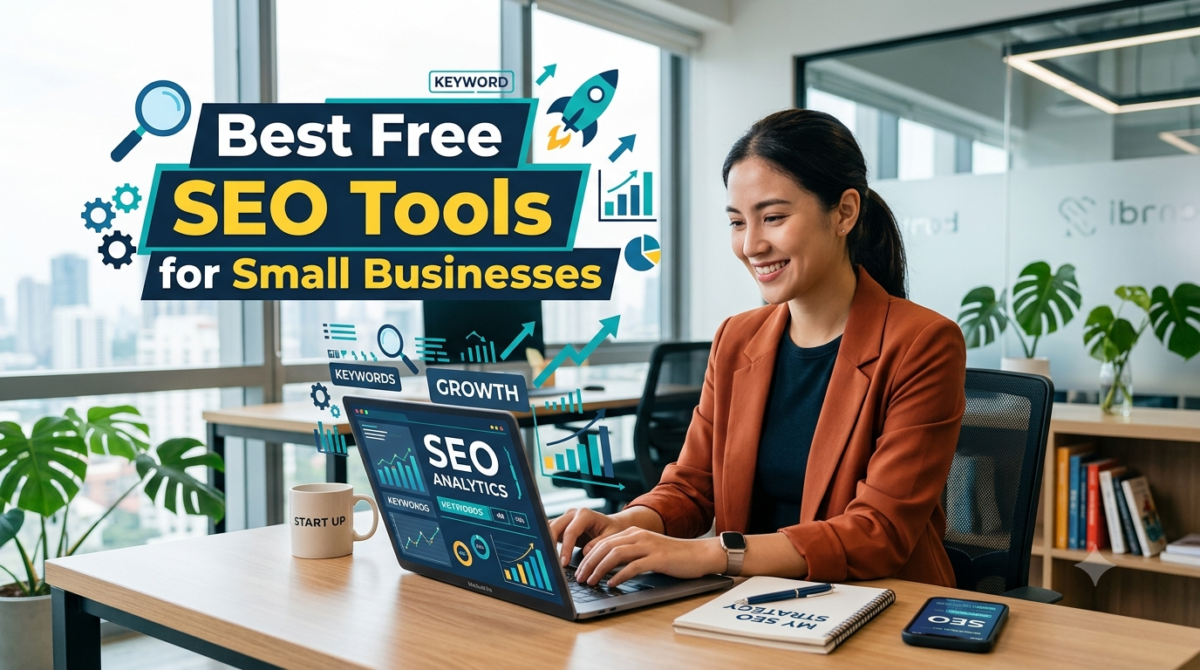
Free tools can still provide significant value.
Some of my favorites include:
Google Search Console
Provides direct performance data from Google.
Google Analytics
Tracks traffic, users, and conversions.
Google Keyword Planner
Helps identify keyword opportunities.
Google Trends
Shows search interest and trending topics.
Together, these tools create a strong free SEO foundation.
Best SEO Tool for Beginners
For beginners, I usually recommend Moz Pro or Mangools.
Both platforms are easy to understand.
In addition, their dashboards feel less overwhelming than larger platforms.
That makes learning SEO much easier.
Best SEO Tool for Local Businesses
Local businesses have different needs.
For local SEO, I often recommend:
- Semrush
- SE Ranking
- Google Business Profile
- Google Search Console
These tools help monitor local rankings and improve visibility in local search results.
How to Choose the Right SEO Tool
The best SEO software depends on your situation.
Before making a decision, consider:
- Your budget
- Business size
- SEO goals
- Local vs national targeting
- Reporting requirements
A local business may need different features than an online store or marketing agency.
Because of that, there is no single perfect solution for everyone.
SEO Tips for Small Businesses
Even the best software cannot replace good SEO practices.
I recommend focusing on:
- Long-tail keywords
- Helpful content
- Google Business Profile optimization
- Website speed improvements
- Quality backlinks
These strategies often produce the best long-term results.
Final Thoughts
Picking the best SEO tools for small businesses in 2026 comes down to budget, skills, and goals. For a full feature set, Semrush tops the list. Ahrefs is great if backlinks are what you’re after. Other solid options include SE Ranking, Mangools, and Ubersuggest – all affordable choices. No matter which tool you pick, it can really help attract more visitors, generate leads, and boost your online competition. Investing in SEO software is worth it for those advantages.
FAQ
Semrush is usually seen as the top pick for small businesses since it merges research, tracking, and reporting in one spot. And yeah, free tools from Google—like Google Search Console, Analytics, and Trends—are totally worth using because they dish out valuable data at no cost at all.
When it comes to what’s easy for novices, both Moz Pro and Mangools make the list. As for what small biz actually needs in an SEO suite, the basics are keyword research, rank tracking, site audits, and traffic analysis tools.
Now, how much should you set aside for this? Small companies generally put anywhere from $30 to $150 a month into SEO software, depending on what works best for them.
But is Google Search Console all you need? While it’s super important, combining it with other tools can give you more insights and stronger keyword data.




1 Comment
[…] Read the full guide:https://thewestcoastjournal.com/best-seo-tools-for-small-businesses/ […]