
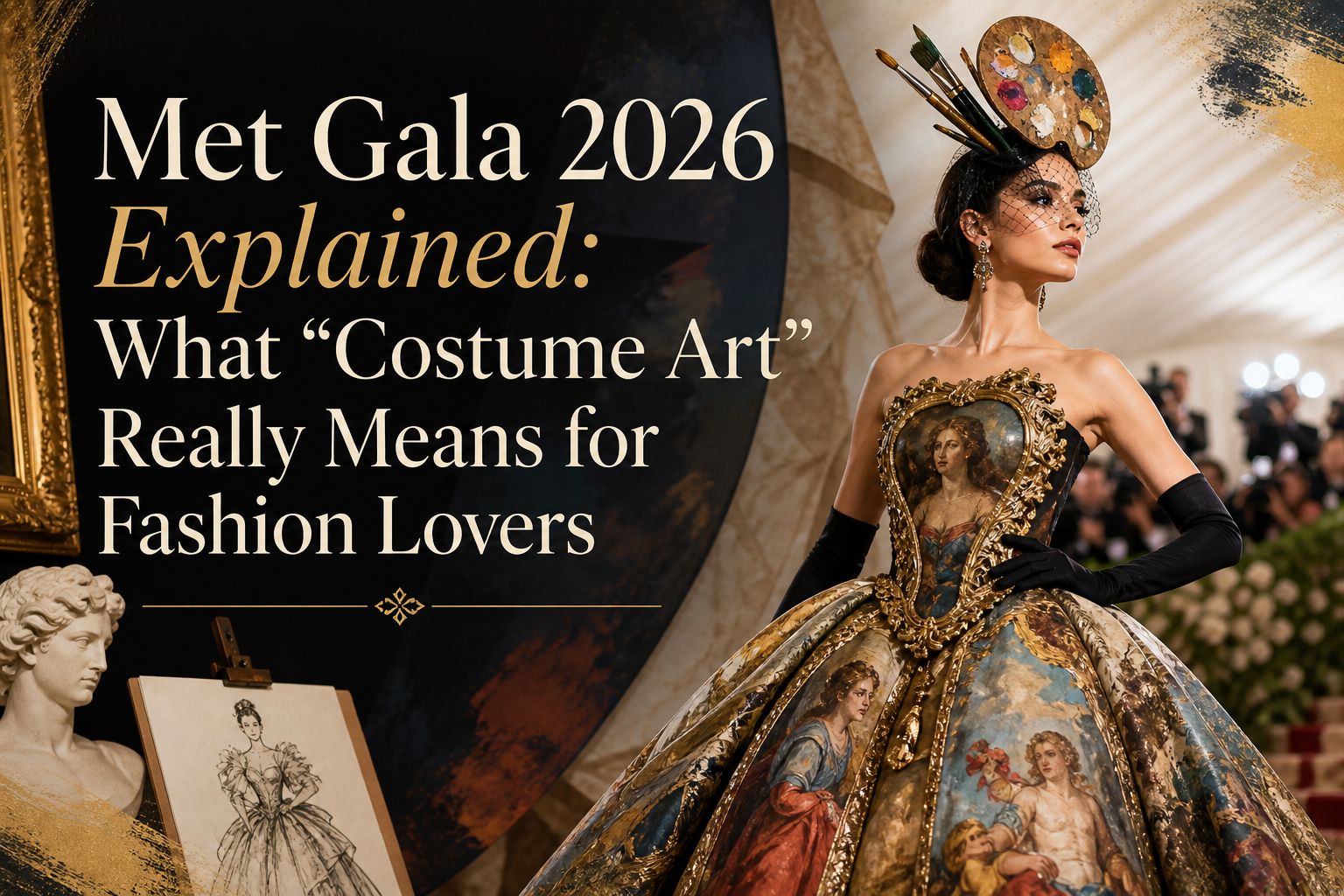
Every year, the Met Gala gives us something to talk about. But 2026 feels different. When I first heard the theme “Costume Art,” I paused. It sounded simple… yet strangely complex.
Is it just about dramatic outfits? Or is there something deeper hiding behind the phrase?
So let me explain this theme as I have comprehended it and why this theme is one of the most interesting ones that I have ever come across.
________________________________________
What Is Meant by “Costume Art”?
The first impression that “costume” gives to a person is associated with theatrical costumes. But “Costume Art” goes beyond that.
- It is all about storytelling through clothes, to me.
- It is not about wearing an attractive piece of attire but wearing a meaningful one. Here, fashion ceases being mere style and evolves into self-expression and performance. Take it this way:
- A regular outfit = style
- A costume = character
• Costume art = storytelling through character
It is through this theme that stars can play characters, concepts, or even ideas.
But you know what? That is when the fun begins.
__________________________________________________
What Makes This Theme Unique
The majority of themes for The Met have revolved around history, culture, or certain designers. But “Costume Art” feels more open.
Almost too open.
And that’s exactly why it works.
It gives celebrities and designers creative freedom to:
- Experiment without rules
- Blend fashion with performance
- Turn the red carpet into a stage
From what I’ve seen over the years, the best Met Gala looks are never the safest ones. They’re the ones people don’t fully understand at first.
This theme almost demands that kind of risk.
5 Outfit Ideas That Could Define the Night
If I had to imagine what “Costume Art” will look like on the carpet, these are the directions I’d expect:
1. The Living Painting
Imagine someone dressed like a moving canvas—brush strokes, textures, maybe even optical illusions.
Not just wearing art… becoming it.
2. Historical Character Reinvented
Think of a royal figure, but reimagined in a futuristic or abstract way.
Not accurate. Not traditional. But artistic.
3. Fantasy or Mythical Persona
Creatures, gods, or fictional beings could dominate the carpet.
Because when else do you get a chance to dress like something that doesn’t exist?
4. Emotion-Based Fashion
This is where it gets personal.
An outfit representing sadness, chaos, love, or power—not through symbols, but through design.
That’s costume art at its purest.
5. Performance-Driven Looks
I wouldn’t be surprised if someone acts on the carpet.
Outfits that move, transform, or tell a story in real time.
Because if it’s art… why should it stay still?
The Risk: When “Costume” Goes Wrong
Let’s be honest not every bold idea works.
There’s always a thin line between:
- Artistic
- Confusing
- Completely off-track
And I think that’s the biggest challenge with this theme.
Some looks might feel:
- Overdone
- Too literal
- Or just… random
But even that has value.
Because “Costume Art” isn’t about being liked by everyone. It’s about making people react.
And in today’s attention-driven world, that might matter more than perfection.
Why Fashion Lovers Should Care
If you’re into fashion—even a little—this theme is worth paying attention to.
Because it signals something bigger.
Fashion is shifting from:
- Trends → to meaning
- Outfits → to narratives
- Style → to identity
And I personally love that direction.
We’re moving into an era where what you wear isn’t just about looking good—it’s about saying something without speaking.
That’s powerful.
My Take: This Might Be a Turning Point
I genuinely think Met Gala 2026 could redefine how we see red carpet fashion.
Not because of who wears what.
But because of how far people are willing to go.
“Costume Art” gives permission to be bold, weird, emotional—even uncomfortable.
And those are usually the moments we remember.
So when you scroll through the looks this year, don’t just ask:
“Does this look good?”
Ask:
“What is this trying to say?”
Because that’s where the real story is.
Final Thought
The beauty of “Costume Art” is that you don’t need to fully understand it to feel something.
And maybe that’s the point.
Fashion, at its highest level, isn’t just about clothes.
It’s art you can wear.